Skydiving Weight Limits: Your Questions, Answered
Tuesday, November 7, 2023
Skydiving Weight Limits: Your Questions, Answered
At Skydive Carolina, we are passionate about making skydiving an unforgettable adventure for everyone. While we would love for all to experience skydiving first hand, there are a number of safety protocols that we are required to follow, including mandatory weight restrictions.
Skydiving weight limits are not in place to discriminate or to keep anyone from enjoying the thrill of skydiving. Weight restrictions are imposed as a matter of safety – which is, of course, top priority when it comes to jumping out of an airplane from a few miles up! So what is it, exactly, about weight that poses a safety risk? We’ve got all your answers here, from the reasons skydiving weight restrictions are in place, to the options available for plus sized skydivers.
Why Are There Weight Limits in Skydiving?
Skydiving weight limits exist for reasons of safety and comfort, and is most definitely not our favorite rule to enforce. At the end of the day, it is our job to keep you, our staff members, and others on the dropzone safe. Here are the reasons why there is a weight limit in skydiving:
Airplane Safety
Defying gravity isn’t exactly an easy task, which is why everything in aviation has a weight limit, even the plane itself. Exceeding the airplane’s weight limit could prevent the plane from taking off or make it too heavy to land safely. To prevent a disaster, we must not exceed the weight limit of an aircraft.
Parachute Safety
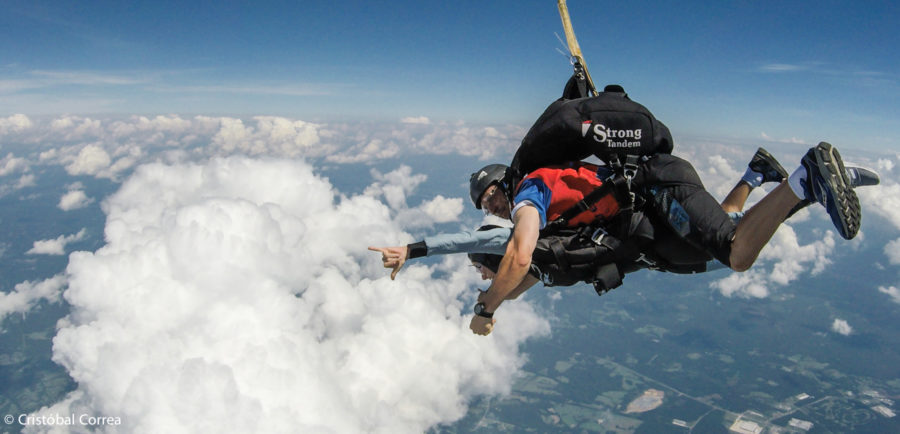
Just like one would pilot any other aircraft, a skydiver pilots a parachute. The same rules for airplanes are true for skydiving: parachutes have their own weight limit. The Federal Aviation Administration (FAA) requires parachutes to undergo rigorous testing in order to be approved for civilian use. Approval with published limits is granted to parachute manufacturers in the form of a Technical Standard Order (TSO). Exceeding a parachute’s predetermined weight limit can result in painful parachute deployments, snapped parachute lines, and hard landings.
Gear Safety
The tandem harness also has its limitations as far as proper fit goes – it must be snug without being too tight and it must not be too loose either. The tandem skydiving harness is adjustable to a certain point. If we can’t achieve the correct fit, there’s no way we’ll risk the dangers of you experiencing pain or injury in freefall or parachute flight, or worse yet, slipping out of your harness. Yikes!
Harness fit is why we stress the importance of being proportionate in height to weight. A person who is 5’ tall and weighs 225 lbs will require different harness adjustments to a person who is 6’ tall and weighs 225 lbs. To make a tandem skydive, your harness must fit properly.
Instructor Safety
It’s just as important for us to take care of our team members as it is our guests. Exceeding the weight limit of a parachute not only compromises its performance but it can also be extremely difficult for instructors to operate and land it safely. Like our guests, instructors are subject to pain, injury or worse when piloting an overloaded parachute; it just isn’t worth it.
Weight Limit for Tandem Skydiving
Weight restrictions vary depending on the skydiving center and the gear they use. Typically the weight limit range falls between 220 lbs and 260 lbs. The weight restriction at Skydive Carolina is 225 lbs.
We are firm on our weight requirement and ask all guests to privately stand on a weighing scale at the time of check-in (shoes and clothes included). We know that this may be awkward and that discussing weight can be uncomfortable or triggering, which is why we do our best to be discreet. No one but the staff member checking you in will read your weight.
Skydive Carolina strives to maintain a culture of safety and this is best done when the answer is clear and concise to all. Therefore, we will not accept any guests who are over the weight limit (even just a little bit) or who do not correctly fit in the tandem harness. Doing so would compromise our safety standards and those set by the manufacturer of our skydiving equipment.
So, please be sure to verify every jumper’s weight limit and read our FAQs BEFORE making a reservation. If you’re not sure if you qualify to jump, get in touch with our team.
What If I’m Over the Weight Limit?
We don’t believe that anyone should be left out of the thrill of a new adventure! Check out our list of other awesome outdoor activities near the dropzone. And if you had your heart set on the feeling of flight, perhaps consider indoor skydiving or parasailing! Should circumstances change and we are able to safely skydive together, we will always be right here for you.
Weight Limit for AFF Skydiving
Accelerated Freefall (AFF) is the program students will go through in order to learn how to skydive completely on their own. The weight limit for AFF skydiving can be different from one dropzone to the next. It is typically the same as the tandem skydiving weight limit, but it’s best to verify with the dropzone. At Skydive Carolina, the weight limit for AFF skydiving is the same as tandem skydiving: 225 lbs.
Plus Sized Skydiving
Once you’re a licensed skydiver, you have a bit of a leeway in terms of body weight as long as your gear is able to safely support you. In skydiving, the impact of weight is significant for several science-related reasons. Here are three factors that plus-sized skydiving can affect.
Terminal Velocity
Terminal velocity is the maximum rate at which something will fall (fall rate). You reach terminal velocity when the force of gravity pulling you down is equal to the air resistance holding you up. A tandem pair typically reaches terminal velocity a few seconds into freefall after reaching speeds of 120 mph.
Terminal velocity is affected by gravity, surface area presented to the wind, density of the air, air resistance, and total weight. The heavier you are and the less surface area you present to the wind, the faster you fall. If you are lighter or present more surface area to the wind, you’ll fall slower.
Your terminal velocity can affect your stability while flying through the sky, and your ability to fly with others (such as your instructors) at varying weights. You might be able to see how this could become a potential issue for a student skydiver flying with instructors – you could accidentally get away from them!Wing Loading
Think of wing loading as a harmony between your weight and the size of your parachute. A plus-size skydiver might require a larger parachute to ensure a safe canopy flight. Excessive weight on a small parachute could be a potential safety hazard when it comes to canopy flight, maneuverability and control, and landing.
Gear Manufacturer Weight Limits
As stated before, skydiving rig manufacturers have weight limits on their gear – which can limit gear availability to plus-sized skydivers. Typically, skydiving harnesses can be custom-made to fit your body. The issue is finding a canopy that is appropriate for your weight, although there are some parachutes with maximum weight limits of 290 lbs. Call around to different dropzones or gear manufacturers to learn about options and to see what gear is available for rent or to purchase.
Have questions? Please feel free to contact the dropzone – we’d be happy to answer any of your questions, honestly and respectfully. Blue skies!
Related Article: 7 Tips to Prepare for Your First Skydive
Categories:
You May Be Interested In:
-

How to Upgrade Your Skydiving Selfie to Skydiving Photoshoot
2 months ago by SkydiveCarolina
-

3 Carolina Skydive Deals Offered Now
4 months ago by SkydiveCarolina
-
5 Tandem Skydiving Safety Stats You Should Know
4 months ago by SkydiveCarolina
-

Live In North Carolina? Where You Should Go Skydiving
6 months ago by SkydiveCarolina
Copyright © 2024, Skydive Carolina, All Rights Reserved.
DropZone Web Design & Marketing by Beyond Marketing, LLC