Skydiving Medical Restrictions: Which Health Conditions Affect Your Jump?
Tandem Skydiving

Key Takeaways
Most people with a well-managed medical condition can make a tandem skydive, but conditions affecting your heart, blood pressure, breathing, spine, or risk of losing consciousness should be cleared with your doctor before you book. At Skydive Carolina, every tandem student must be at least 18 and weigh under 225 lbs, including clothes and shoes. Federal regulations prohibit anyone who is, or appears to be, under the influence of alcohol or an impairing drug from skydiving. If you have any condition on this list, tell our staff before your jump, disclosure is what lets your instructor plan the safest skydive for you.
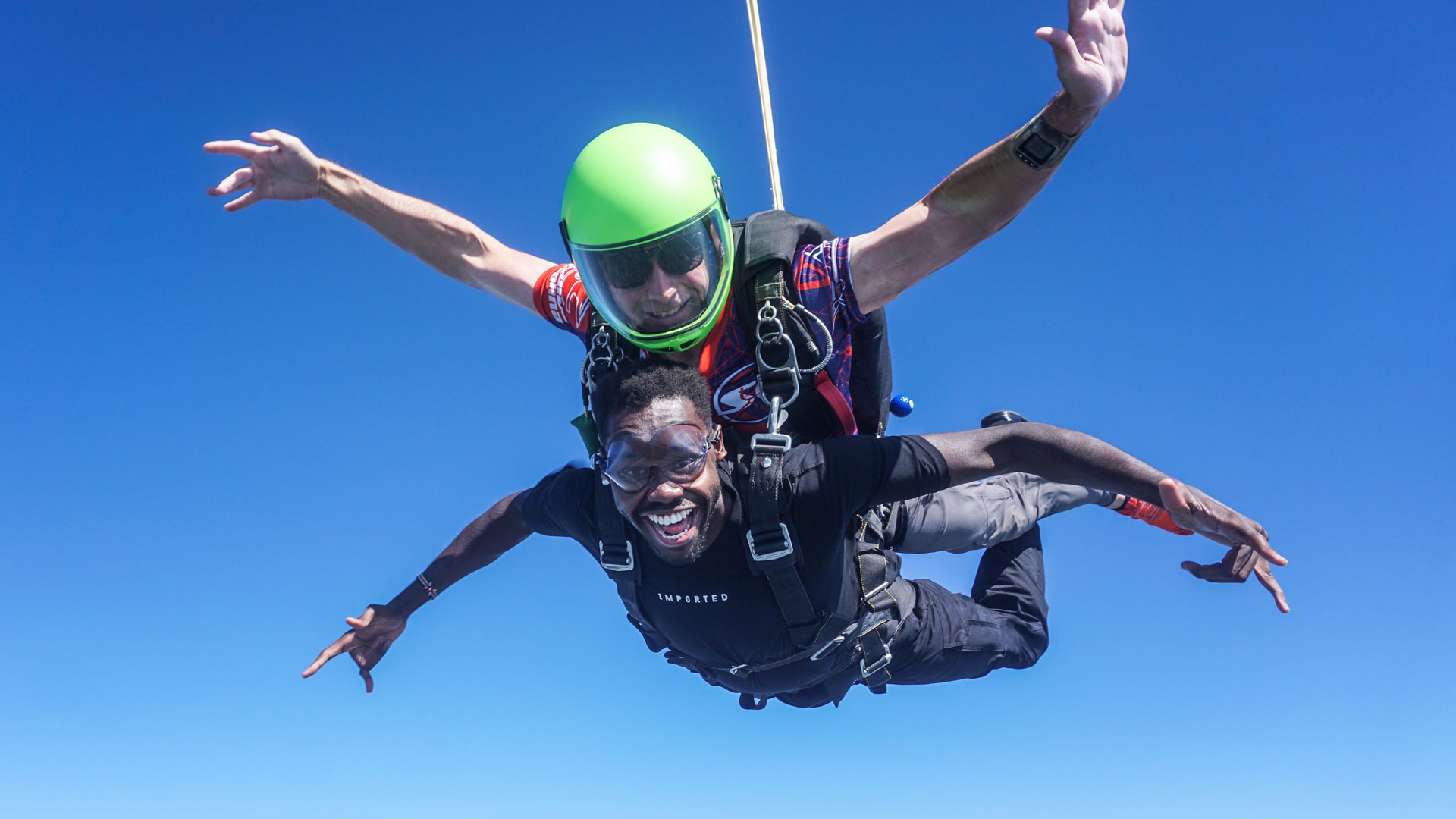
Most people with a well-managed medical condition can make a tandem skydive, but some conditions need a doctor’s clearance before you book. If you’re wondering what medical conditions disqualify you from skydiving, the answer depends on your condition, how well it’s controlled, and what your doctor says.
We know skydiving; we’re not doctors. If you have a health condition that could affect your ability to safely participate, talk with your physician before making the jump.
Can You Skydive With a Medical Condition?
Usually, yes! Well-managed health conditions don’t automatically keep you on the ground. However, conditions involving your heart, blood pressure, breathing, spine, or risk of losing consciousness may warrant medical clearance first.
How come? Because skydiving asks a little more of your body than your average Saturday activity: you’ll experience a rapid altitude change, the physical demands of freefall, the deceleration of a parachute opening, and a legs-up landing position.
What a Tandem Skydive Asks of Your Body
Your body needs to be able to:
- Crouch down and climb into and out of an aircraft.
- Handle the altitude and pressure changes of an unpressurized aircraft.
- Maintain the arch position during freefall – the wind helps you out!
- Handle the forces created when the parachute opens.
- Lift your legs and follow your instructor’s directions during landing.
If your condition could interfere with any of those things, your doctor should weigh in.
Skydive Carolina’s Tandem Requirements at a Glance
So who is not allowed to skydive? At Skydive Carolina, you must be at least 18 years old and weigh under 225 pounds, including your clothes and shoes. Can you go skydiving if you weigh 300 pounds? Unfortunately, not here and not at most dropzones. Skydiving facilities must adhere to strictly imposed equipment weight restrictions, and must keep the safety of customers and instructors as the highest priority.
You also need to be in generally good enough physical and mental health to follow instructions and complete the required body positions mentioned above. Alcohol and impairing drugs are a no-go, too.
And if you have any medical condition, tell our team before your jump! Communication is key in this sport.
| Requirement | What it means for you |
| Age | You must be at least 18 years old to make a tandem skydive. |
| Weight | Tandem students must weigh under 225 lbs, including the clothes and shoes you’ll jump in. |
| Sobriety | No alcohol or impairing drugs. Federal regulations (14 CFR 105.7) prohibit anyone who is, or appears to be, under the influence from skydiving. |
| Medical conditions | Tell our staff about any health condition before your jump, including ones that are well-managed. |
| Doctor’s clearance | A doctor’s note isn’t usually required, but if you have any condition covered below, it’s suggested to check with your doctor before you book. |
Medical Conditions That Need Your Doctor’s Green Light
Can You Skydive With High Blood Pressure?
Can you go skydiving if you have high blood pressure? Possibly! If your high blood pressure is controlled, you may be able to skydive, but talk to your doctor first. Skydiving puts additional physical demands on your body and your cardiovascular system, so uncontrolled blood pressure is a concern.
Can You Skydive With a Heart Condition?
Maybe, but this is a definite doctor-first situation. Heart disease, arrhythmias, a previous heart attack, or other cardiac conditions can affect how your body handles the physical demands of a jump.
What about a heart murmur? A heart murmur isn’t automatically a no. Some are harmless, while others indicate an underlying heart problem. Your doctor can tell you which category yours falls into!
Can You Skydive With a Pacemaker?
Generally, yes, but get your cardiologist’s clearance first. A pacemaker itself isn’t necessarily the deciding factor; your underlying heart condition and ability to handle the harness, parachute opening, and landing are what matters.
Can You Skydive With Asthma or Other Breathing Conditions?
Well-controlled asthma can be compatible with tandem skydiving. Asthma, COPD, a history of a collapsed lung, and other respiratory conditions can make altitude, exertion, and breathing demands more significant.
If your condition is severe, unstable, or has recently changed, it’s best to wait until you’ve been medically cleared.
Can You Skydive With Diabetes?
Possibly, if your diabetes is well managed. Stable blood sugar is particularly important on a long jump day, so talk with your doctor and bring the supplies you normally use to monitor and manage your condition.
Can You Skydive With Epilepsy, POTS, or a History of Fainting?
The biggest concern here is the possibility of losing consciousness during a jump. People with these issues can skydive, but it’s important to get the greenlight from your doctor and to have a plan of prevention. For example, do you commonly faint if you are dehydrated and low on sodium? The day of your jump would be the day to not let yourself slip into that!
Can You Skydive With Back or Neck Problems?
Sometimes, but we suggest you get clearance first. Your body needs to arch during freefall, and you’ll lift your legs for landing. The parachute opening also creates a sudden change in force.
Skydiving After Surgery
Wait until you’re healed and your doctor says you’re ready! The harness, freefall position, parachute opening, and landing can all put stress on healing tissue. Your surgeon knows what was repaired and how you’re healing, so don’t rely on a generic recovery timeline.

Temporary Restrictions: When to Reschedule, Not Cancel
Some skydiving health restrictions are temporary. You cannot skydive while pregnant. And if you’re dealing with a cold, congestion, sinus problems, or an inner-ear issue, wait until you’re feeling better. Rapid pressure changes can make these conditions particularly uncomfortable and even dangerous. Busted eardrum? No thanks.
And alcohol or impairing drugs? Absolutely not. The sky will still be there when you’re feeling better. What about hangovers? Same thing. We recommend not participating in a skydive if you’re hungover.
Skydiving With a Disability
A disability doesn’t automatically mean you can’t skydive. The sport includes solo skydivers who are amputees, deaf, or paraplegic, and many people with different abilities make tandem jumps.
Accommodations depend on the individual, so contact Skydive Carolina to talk through your specific needs – we will do everything we can to have you jump without compromising safety!
Do You Need a Doctor’s Note to Skydive?
Nope, not as a blanket requirement. Our current guidance asks people with certain medical conditions to consult their doctor before booking, rather than requiring every student to bring a doctor’s note.
Are Medical Requirements Different for Solo Skydivers?
Yes! Tandem students have an instructor handling the technical aspects of the jump, while Accelerated Freefall students take on much more responsibility themselves. If you’re interested in learning to skydive, check out our AFF program.
Talk to Us Before You Book
Have a medical condition? Tell us! It doesn’t automatically mean you can’t jump. It simply means we need to make sure your skydive is appropriate for you. Talk with your doctor when needed, then check out our FAQs or contact our team with your questions. Once you’ve got the green light, it’s time to get your feet off the ground! Ready? Book your jump today!
Related Article: How Old do you have to be to Skydive?
You May Be Interested In:
Is Skydiving Scary? An Honest Look at First-Jump Fear
4 months ago by Skydive Carolina
Skydiving Weight Limits: Your Questions, Answered
5 months ago by Skydive Carolina

First Time Tandem Skydiving: The Complete Guide to Your First Jump
6 months ago by Skydive Carolina
How Much Does It Cost to Go Skydiving?
6 months ago by Skydive Carolina